Foreclosure, Reorganization, and the Birth of the A&Y
From the CF&YV’s collapse to the A&Y’s first day of operations
The Long Road to Foreclosure
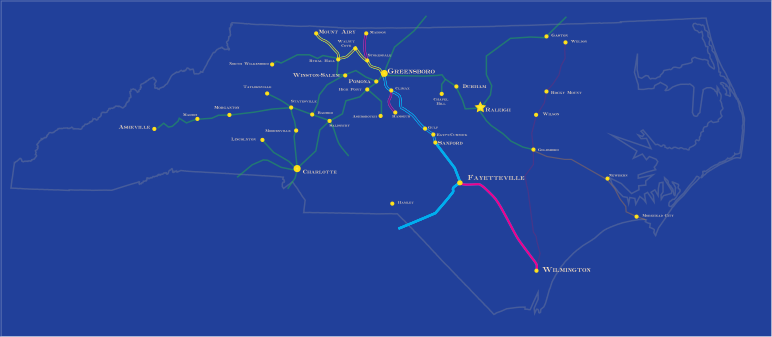
The efforts to restructure the CF&YV’s crippling debt had failed. Foreclosure with an appointed receiver occurred in 1894. In 1895, the major investors were permitted to form two reorganization committees — the New York and the Baltimore Committees. Negotiations dragged on for two years. In 1897, a formal decree of foreclosure and sale was announced, but re-hearings were requested, with the New York Reorganizing Committee appealing all the way to the U.S. Supreme Court.
The New York Reorganization Committee held bonds and business interest in the A Division (Greensboro to Bennettsville) and wanted the CF&YV sold by division or in parts, so they could buy at auction and control the profitable segment without being dragged down by the B and C divisions. The Baltimore Reorganizing Committee represented later investors who had stakes mostly in the B and C divisions — if the railroad were not sold as a whole, those divisions were unlikely ever to be profitable and the investors would lose everything. The state of NC favored the Baltimore Committee’s plan, wanting to preserve an east-west rail connection across the state.
In November 1898, the New York Committee’s appeal was dismissed by consent of all parties, who had finally reached agreement. In December 1898, the CF&YV was auctioned off.
The Auction and a New Company
On January 13, 1899, the sale for $3.125 million was certified and all the properties conveyed to the winning bidders, representing the Wilmington & Weldon Railroad — soon to become the Atlantic Coast Line. But this was not the end of the story.
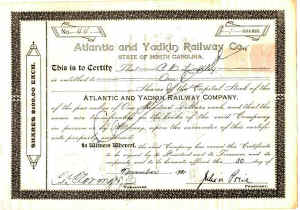
While the sale conveyed the whole to the purchasers, the charter allowed for a new company to be organized — and this new company could sell or merge itself however it saw fit. So before the end of January, a new company, the Atlantic & Yadkin Railway, was organized and all the properties of the CF&YV were deeded to it. On February 23, 1899, the North Carolina legislature confirmed the reorganization and formation of the A&Y.
The following day, the Wilmington and Weldon procured an Act in NC allowing the company to "consolidate, merge, sell or lease its railroad in whole or in part with or to the Wilmington and Weldon Railroad Company" in order to create the Atlantic Coast Line. The governor and legislature may not have realized this language also applied to the recently acquired A&Y.
The Split at Sanford
By May 13, 1899 — only four months after the sale of the CF&YV was certified — the A&Y partitioned itself 100 feet west of the Seaboard Air Line crossing in Sanford, effectively splitting the CF&YV in half.
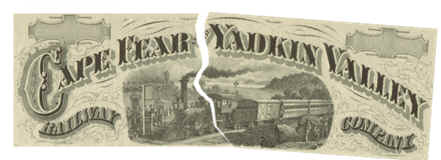
In the same process, the A&Y sold the line from Sanford to Wilmington plus the Bennettsville branch (from Fayetteville to the state line, and the lease of the South Carolina railroad), the Aldrich Quarry branch, and one half the rolling stock of the former CF&YV to the nascent ACL.
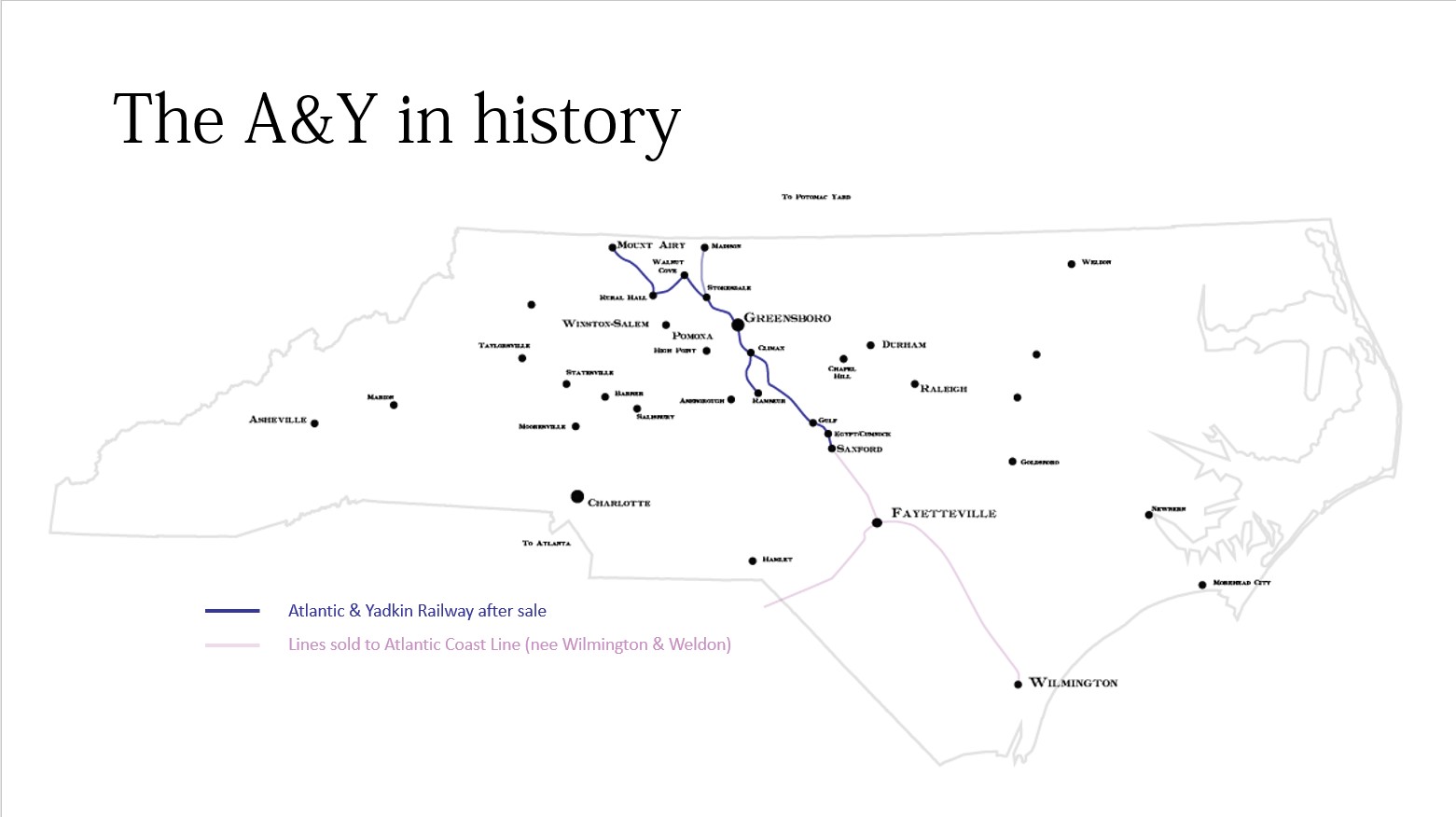
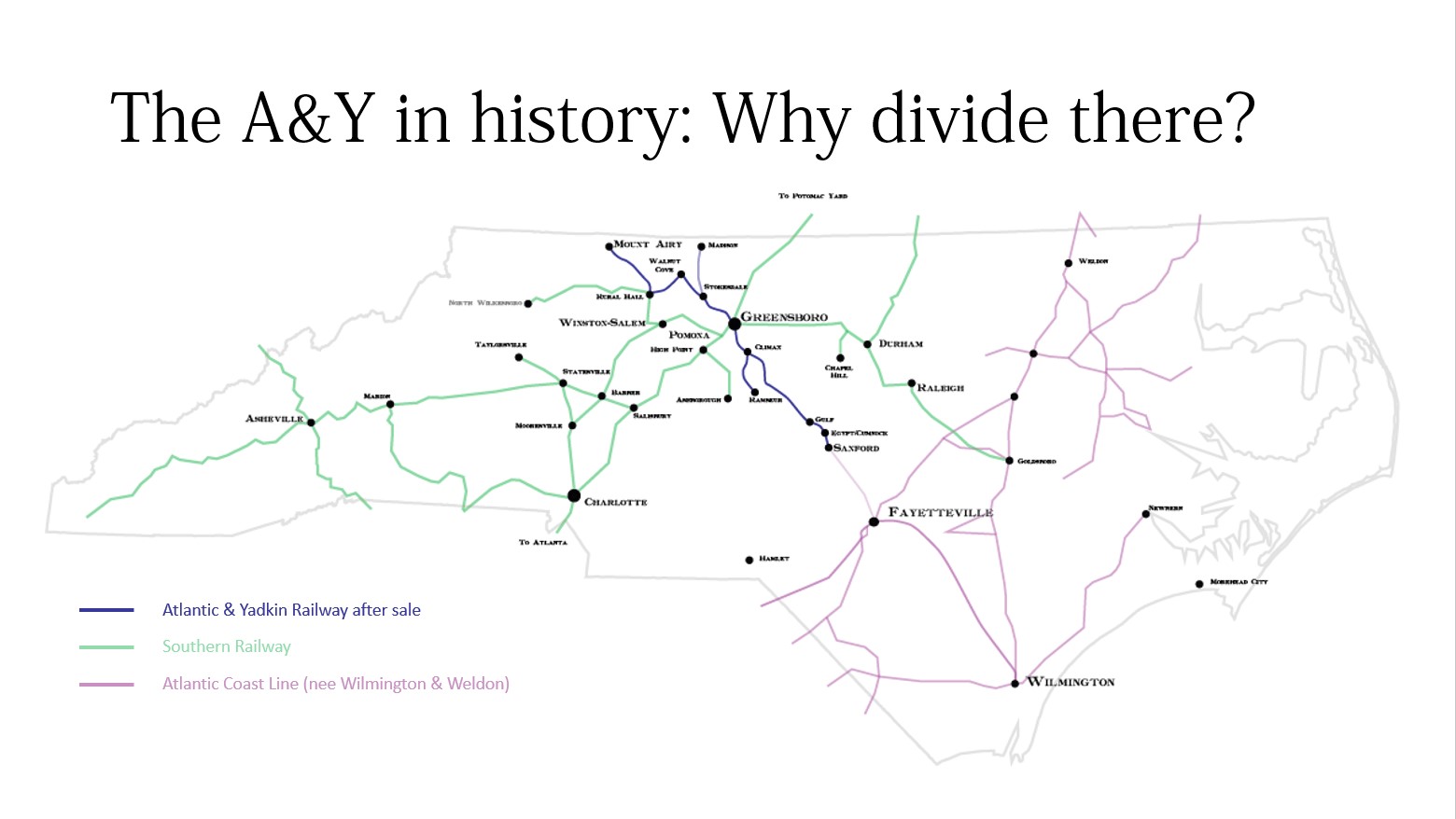
If you look at a map of the split and the connections with the two railroads that bid for the CF&YV, it is obvious why the split occurred in Sanford. North Carolina was effectively partitioned just like the railroad — the Southern’s interest ran north and west toward Virginia; the ACL’s interest ran south and east toward the coast.
The Southern Takes Control
Simultaneously with the split and the formation of the ACL, the A&Y’s entire capital stock was conveyed to the Southern Railway. The newly created A&Y — consisting of 165.88 miles of mainline and branches — was thus funded by and wholly owned by the Southern, which issued bonds secured by a mortgage dated May 15, 1899. Those bonds were due April 1, 1949 — and that due date foreshadows the ultimate fate of the A&Y.
It could be wondered whether the creation of the Atlantic Coast Line as well as the A&Y was in part a response to the desire to form the A&Y and split the CF&YV in half. The owners of the Wilmington & Weldon would have found the limitations of the charter at some point regardless, but the sale and disposition of the CF&YV was clear motivation for the timing.