Origins: The Western Railroad
Coal, the Cape Fear River, and a dream of reaching Ohio
A Railroad Built for Coal
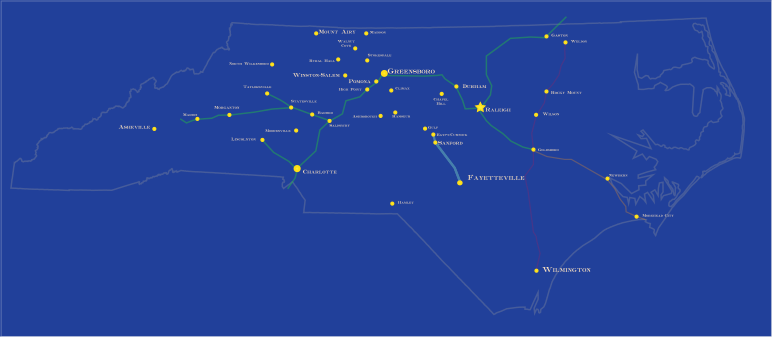
The rails that would eventually carry the Atlantic & Yadkin Railway began as a much more modest proposition: moving coal. The Western Railroad was chartered by the North Carolina legislature on February 14, 1852, with a straightforward purpose — to haul coal from the mines at the Deep River near Egypt (a community later renamed Cumnock) south through Sanford to Fayetteville on the Cape Fear River, where it could be transferred to boats and moved to market.
The Deep River coalfield in Chatham and Lee Counties was the only significant coal deposit in North Carolina, and getting it to tidewater was an economic priority. The Cape Fear River at Fayetteville was a natural terminus: boats could reach Wilmington and the Atlantic coast from there, opening markets up and down the Eastern Seaboard.
The Bigger Vision
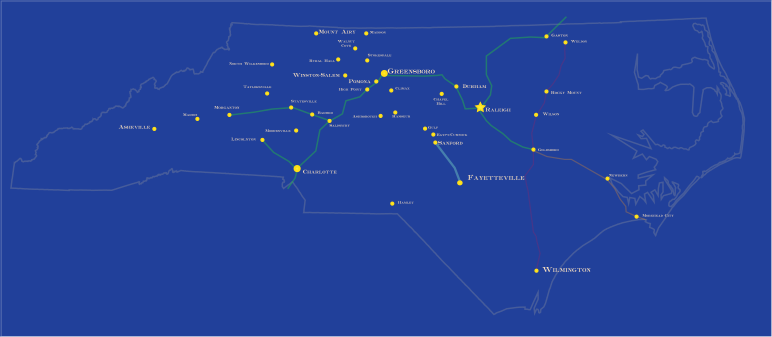
The coal-to-Fayetteville route was a practical starting point, but the promoters who worked the legislature had a far grander vision in mind. The ultimate goal was a line stretching northwest all the way to the Ohio River — a trans-Appalachian railroad that would tie North Carolina into the growing web of commerce connecting the interior of the country to the coast.
This ambition was not unusual for the era. The 1850s were a period of intense railroad speculation across the South, with every state legislature chartering lines whose projected routes far outran available capital or engineering reality. The Western Railroad was one among many such aspirational charters, distinguished mainly by the fact that a short segment of it — the coal-hauling section — was actually commercially viable from the start.
The promoters secured approval and some funding to begin construction. The coal mine section from Egypt to Fayetteville was the priority, and that segment was graded and put into operation in the years following the 1852 charter. The northward extension toward Greensboro and beyond remained, for now, a line on a map.
1867: Authorization to Extend — and Nothing More
In 1867, the Western Railroad received legislative authorization to extend its line northward to the North Carolina state line near Mount Airy. This would have pointed the railroad toward the granite quarries of the Surry County foothills and — if further extended — toward the Virginia coalfields and the Ohio River trade that the original promoters had dreamed about.
Nothing in the way of actual construction came of it. The Western Railroad was already contending with the financial chaos of the immediate post-Civil War period, and the legal landscape was further complicated by ongoing litigation over the mortgages that had been used to finance the original line north of the coal mines. Creditors had competing claims on any revenue and any new construction, making fresh investment difficult to attract.
The authorization sat unused. It would take another decade and a complete reorganization of the corporate structure before the northward extension would move from legislative charter to actual graded roadbed.