Working Documents
Running a railroad generated a constant flow of paper: authorizations, orders, receipts, waybills. Three documents in particular defined the legal and operational framework for every train movement. The clearance card said you were allowed to enter the main line at all. The train order told you what conditions applied to this particular run — a meet, a restriction, a speed order. The waybill traveled with the freight and told the car agent what was in it, where it came from, and where it was going.
Surviving A&Y working documents are uncommon. The examples here span roughly twenty years of A&Y operations, from a partial form from 1922 that turned up on eBay to wartime-era operational documents from the mid-1940s. Together they begin to fill in the picture of how this railroad’s paperwork looked and worked.
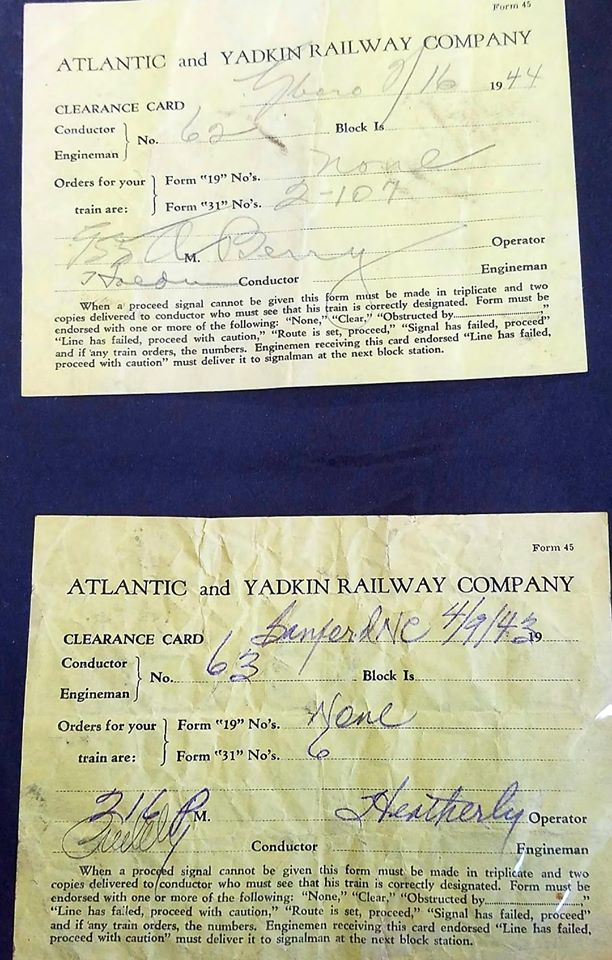
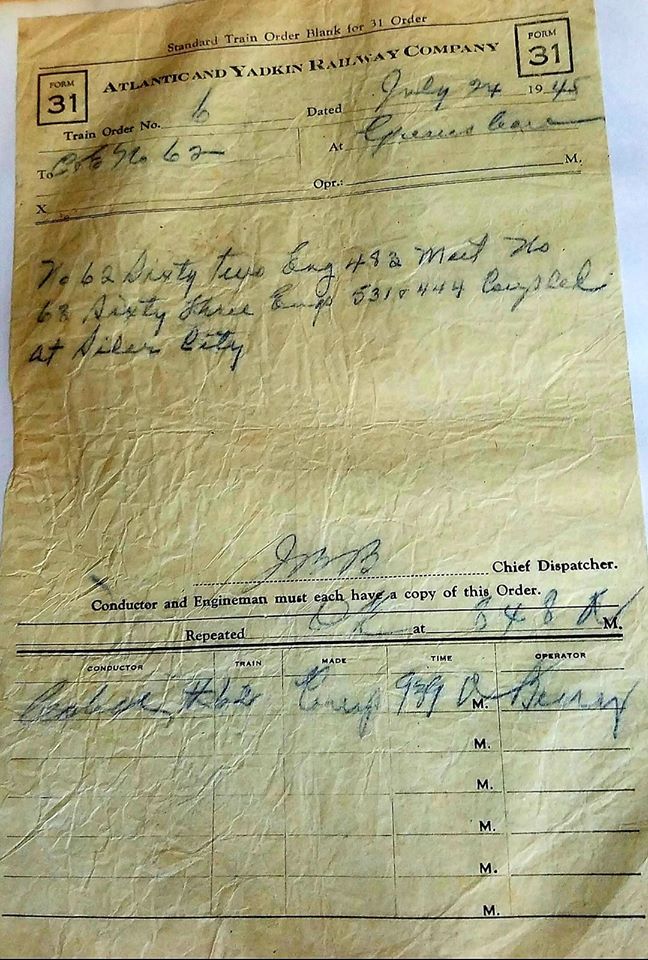
Clearance Card and Train Order · ca. 1944–1945
These two documents from roughly the same period show the first two steps in authorizing a train movement under train-order operation. Both would have been in the conductor’s possession before the train departed.
The clearance card was the dispatcher’s written statement that all outstanding train orders for this train had been received and acknowledged — the formal green light to enter the controlled main line. Without a clearance card the train cannot depart. The form on the left is from around 1944.
The train order, Form 31 was the more formal of the two standard order types. A Form 31 required the conductor and engineer to sign receipt of the order before the train could proceed — the dispatcher held the train until signed copies came back. Form 19 was a simpler "addressed to" type that did not require a stop and signature. When a dispatcher issued a Form 31, the situation was considered serious or complex enough to require confirmation. The example here is dated July 24, 1945, a mid-war operational document.
Freight Bill · Form 80 · 1942
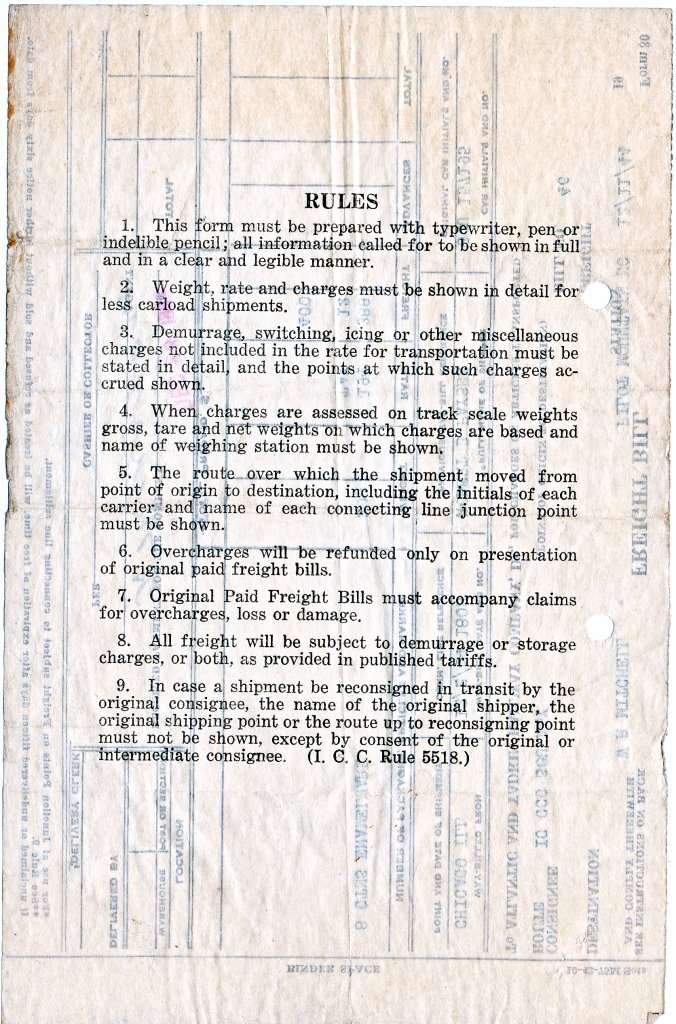
The freight bill — also called a waybill — was the document that traveled with a freight car from origin to destination. It identified the shipper, the consignee, the commodity, the car number and road, applicable tariff rates, and billing instructions. The car agent at each intermediate yard consulted the waybill to route the car correctly. At delivery, the waybill completed the chain of custody and settled the freight charges.
This 1942 example, A&Y Form 80, is shown front and back. The form design reflects standard Southern Railway system practice adapted for A&Y use. A PDF of both sides is available below.
📄 Open Form 80 PDF ↗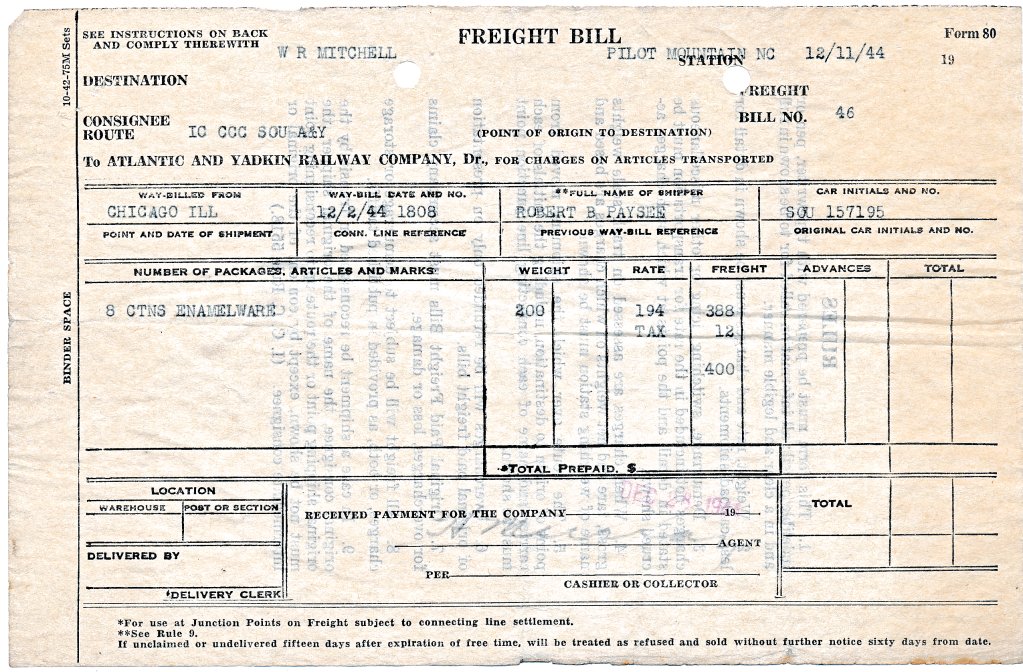
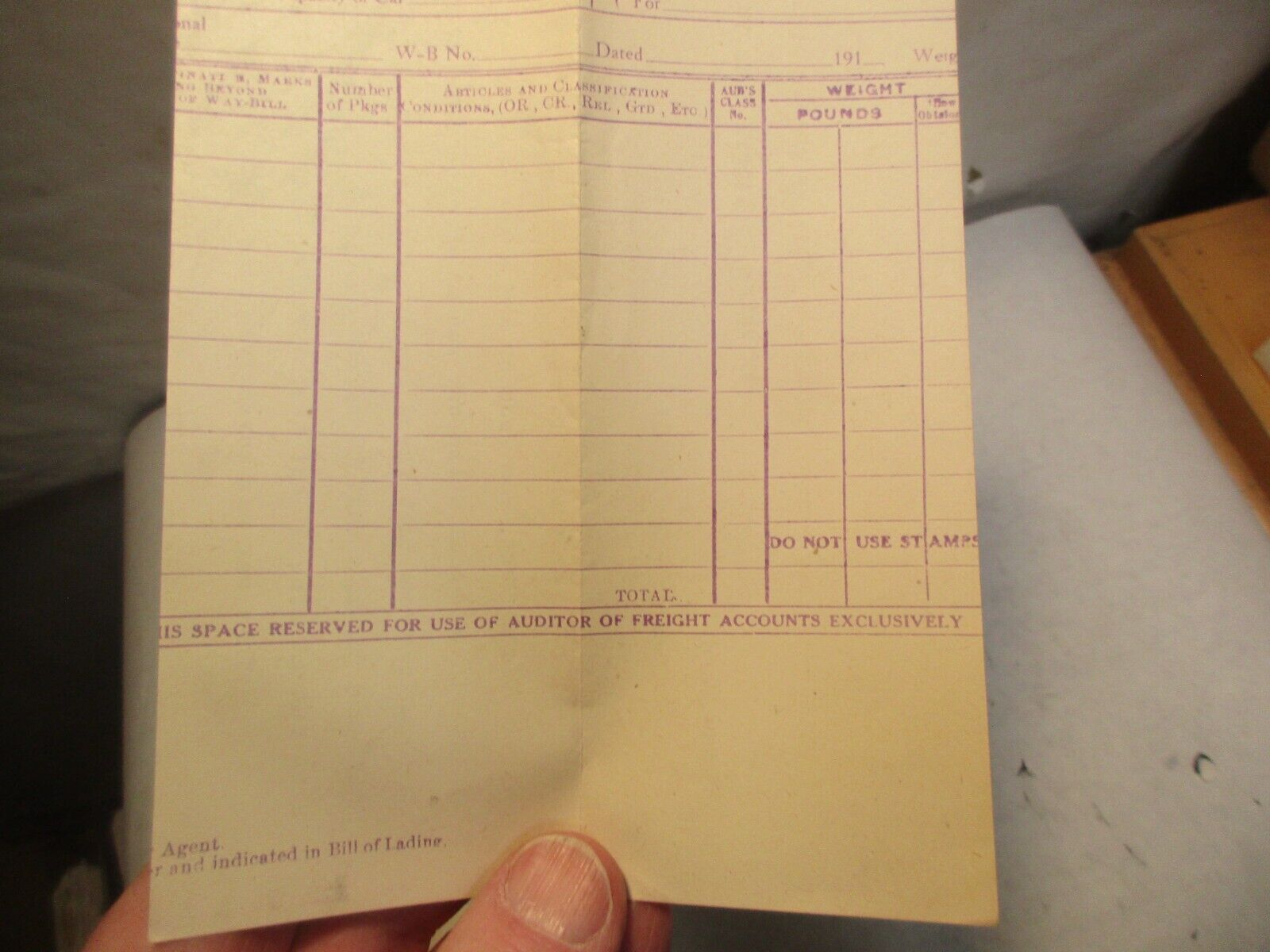
Car Routing Record · ca. 1922
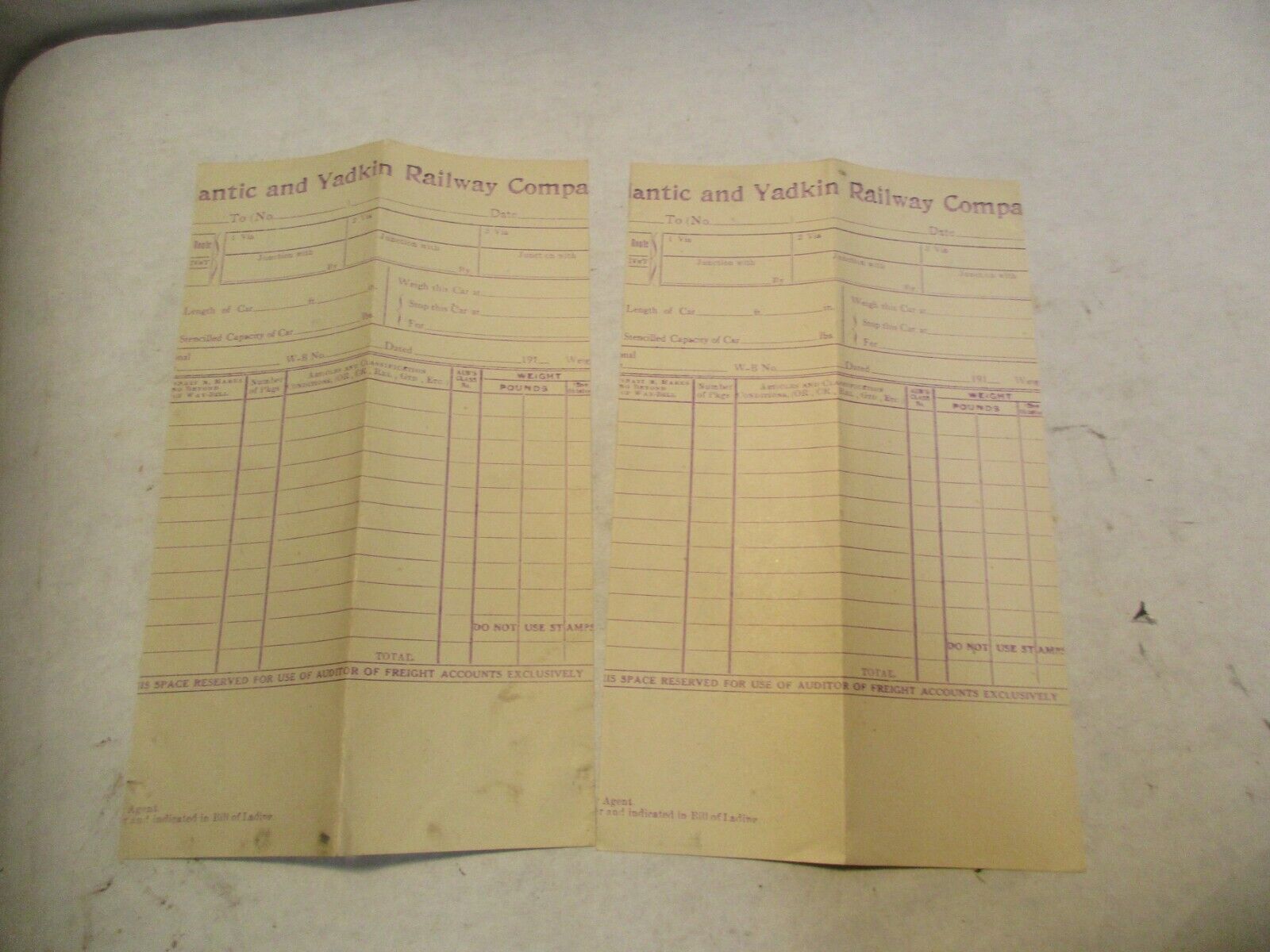
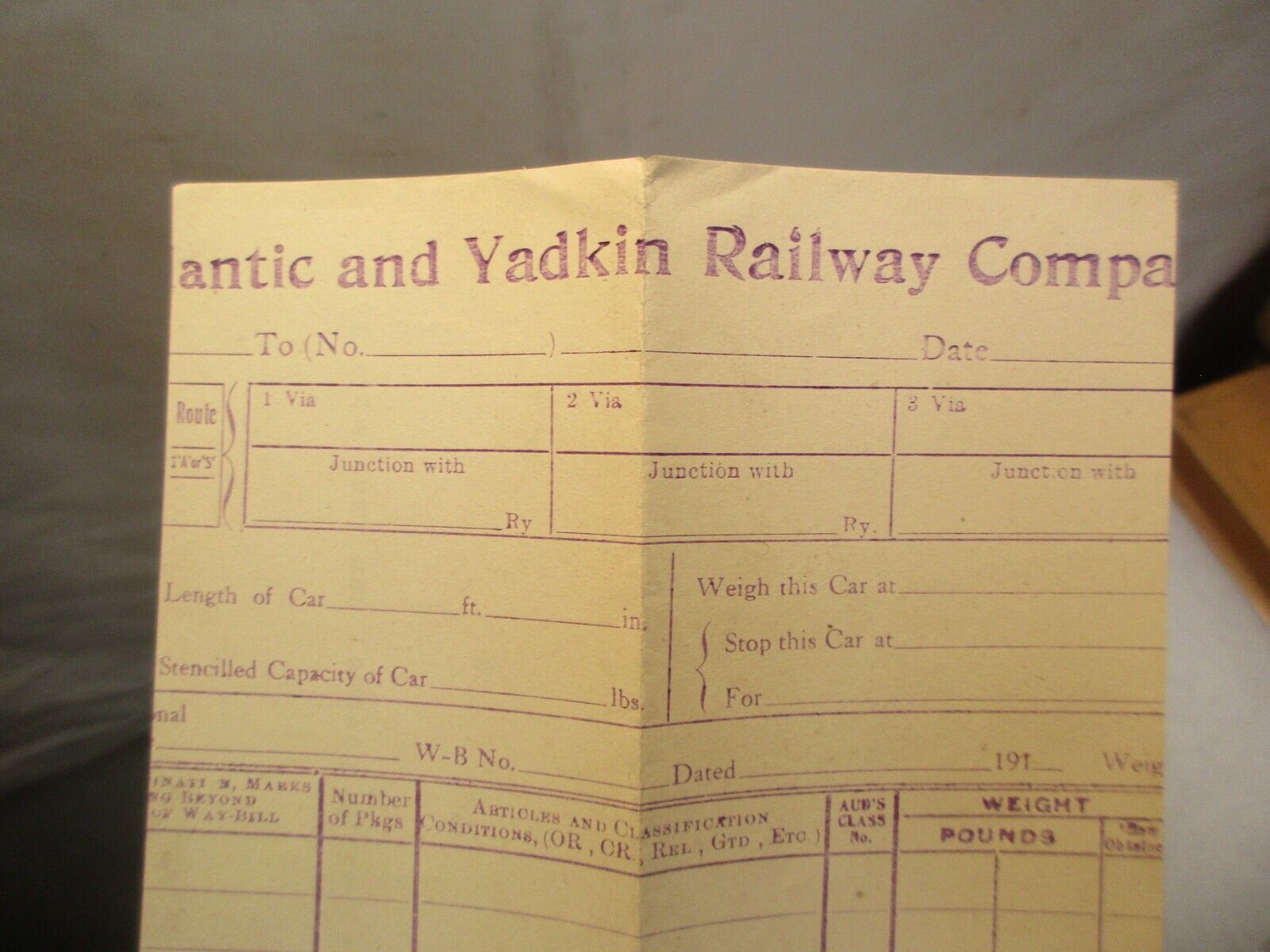
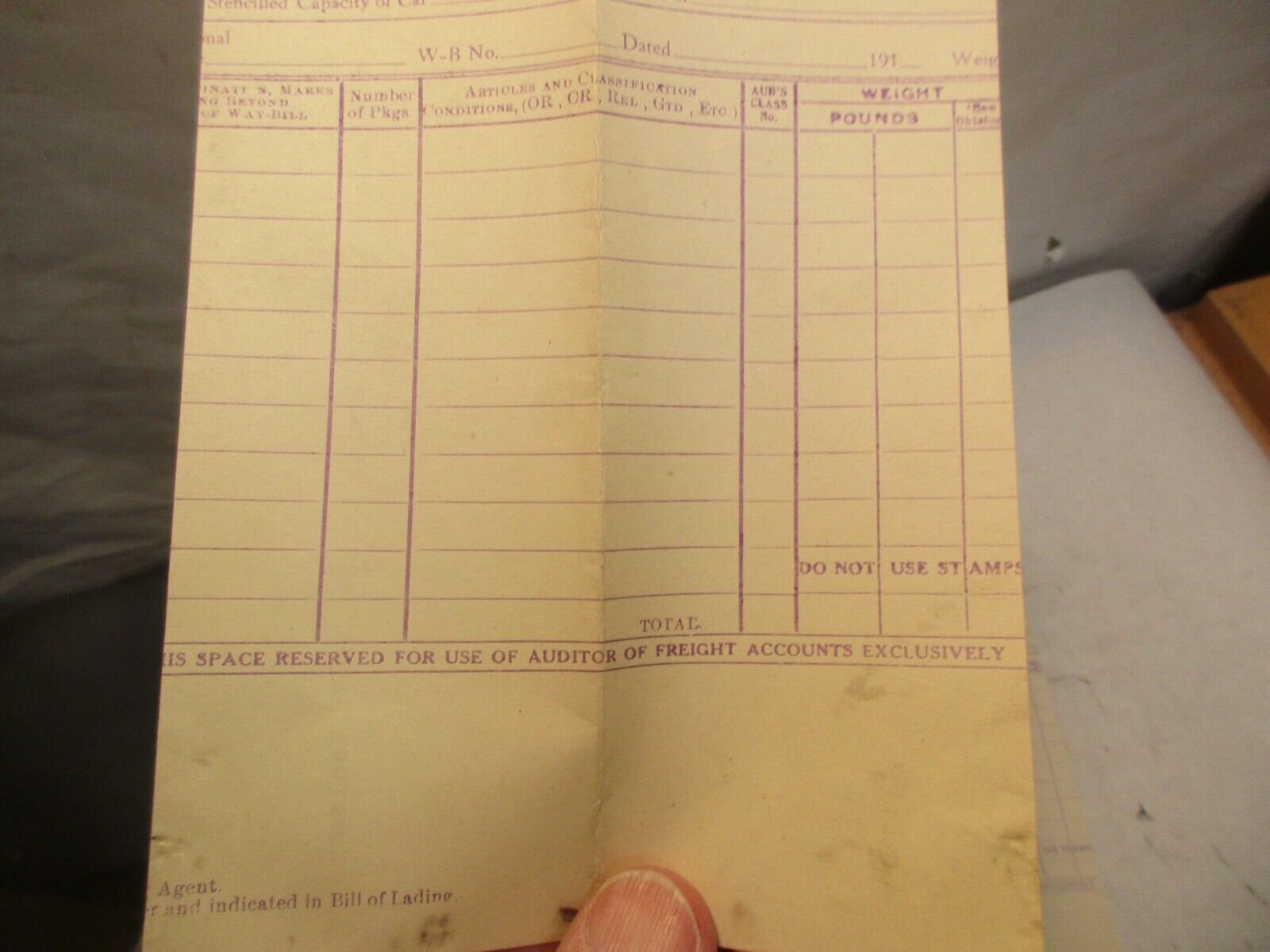
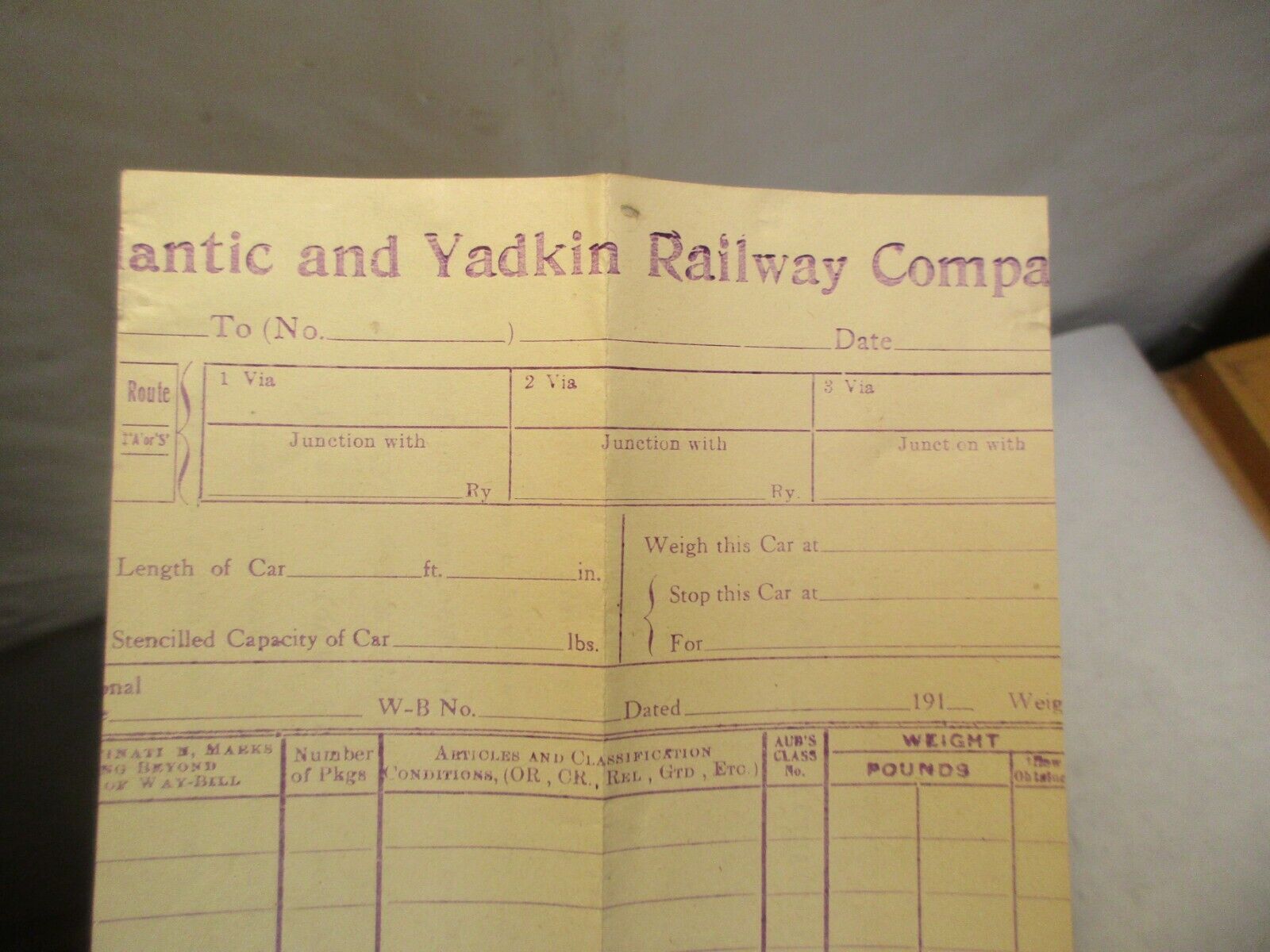
These five images show two copies of an A&Y form, acquired from eBay. The paper is brittle and both the left and right edges are missing where old creases caused the paper to detach, so the complete form title and some column headers are lost.
What survives is enough to identify the document type. The form is not a waybill itself — it contains a "W-B No." reference field, meaning it was linked to a separate waybill. The routing section at the top indicates the form tracked interchange routing across multiple connecting carriers. Other fields include car dimensions (length, stenciled capacity, weight at origin), routing instructions, and commodity columns for number of packages, articles with classification conditions (OR, CR, Rel, GTD, etc.), AUB classification number, and weight in pounds. This combination of routing, car, and lading detail points to some form of car forwarding or through-freight record. It probably accompanied a car in interchange service and summarized the movement for each intermediate carrier.
The forms are blank. The year field suggests it was designed in the first two decades after 1900. The 1922 date in the file name more likely reflects the provenance of the collection. If a supply of these pre-war blanks was still in service on the A&Y in 1922 it shows they made do with what they had. A railroad on the edge of receivership would not have the luxury to order new stock while serviceable forms remained in the supply room. These are among the few surviving documents I have found. Sources are thin, and I would appreciate any images of other forms so that I may display them here for a better picture of how the A&Y operated.