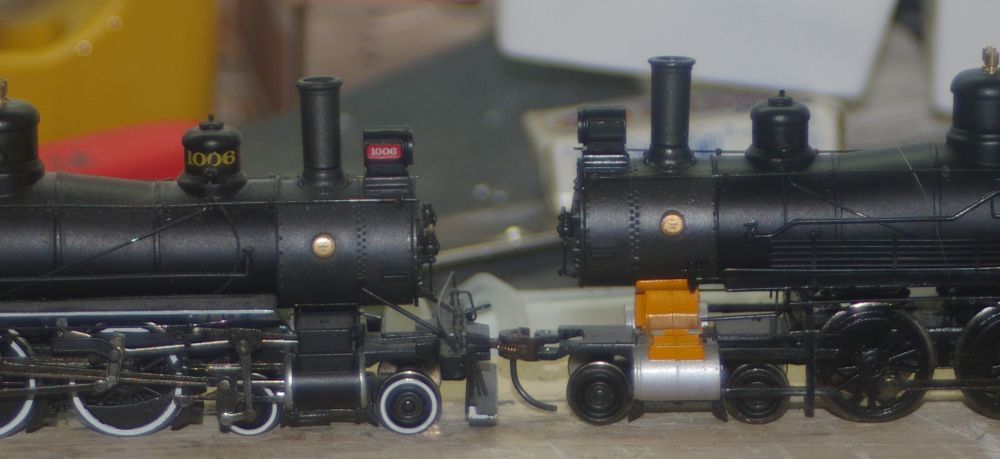
Modeling D&W #20
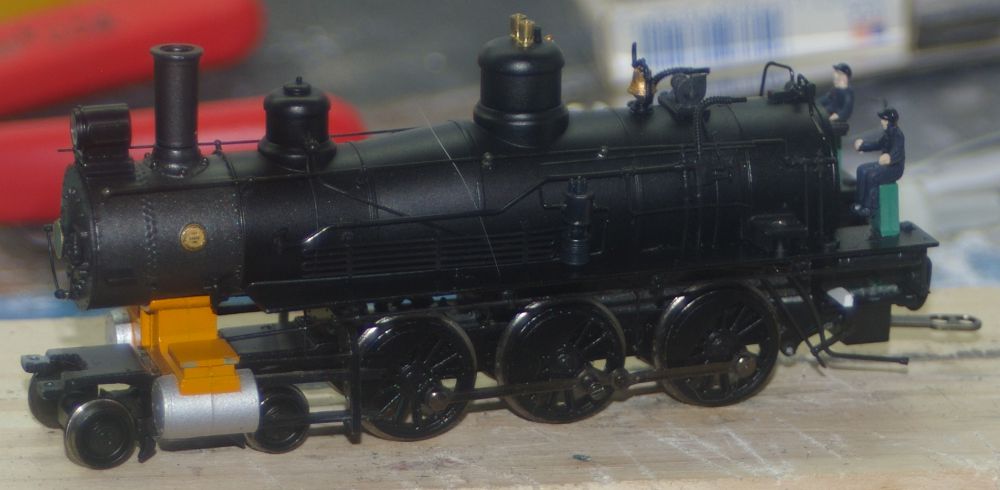
Modeling D&W #20 in HOI have started trying to kit bash the Bachmann Spectrum low drivered 4-6-0 into a reasonably accurate model of D&W #20, and will describe the progress here. I cannot guarantee how well it will turn out, or even that I will finish it, but we shall see. Hopefully I can inspire someone else, or at least give a few pointers on what not to do!
The first step is to completley dismantle the engine. For the time being, I have left the various details on the boiler, and simply set the tender aside. Because the frame and motor assembly must be modified, it is important that all the moving parts be removed. Hopefully it won't be too hard to get it back together again. I use some project boxes which I made from plastic drawer organizers to hold a disassembled locomotive without losing any of the pieces.
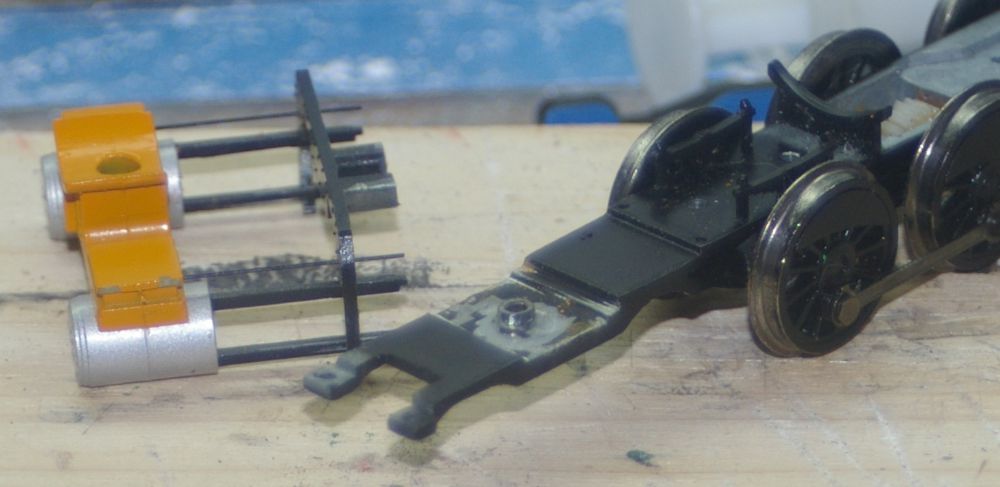
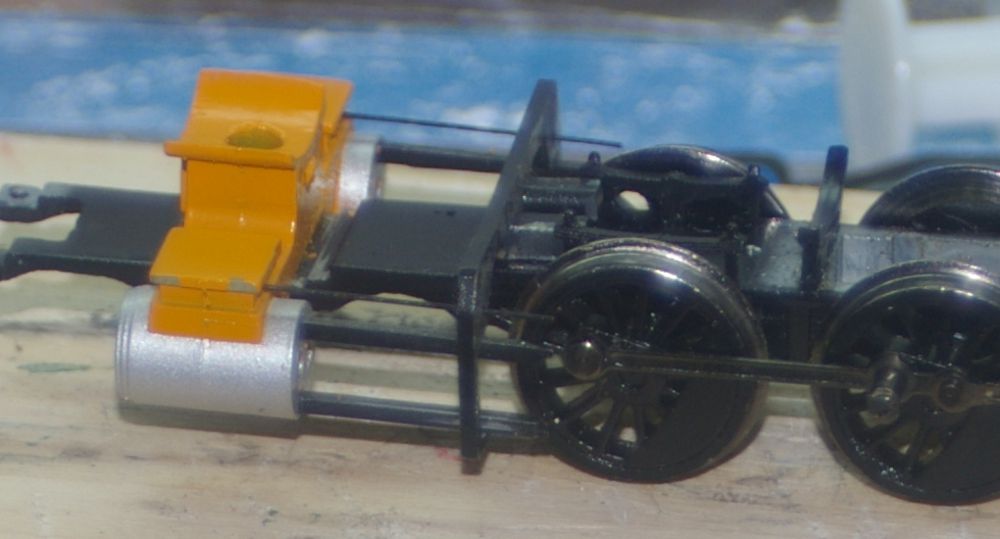
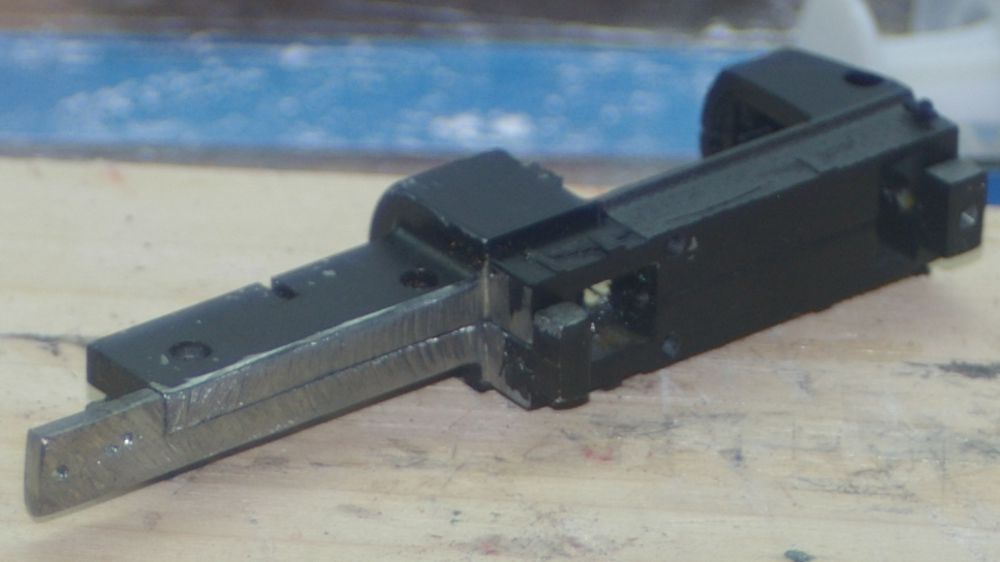
I started by tackling the cylinders and valve gear, the major difference (along with the cab) between the model and the prototype. Since I am also modeling #24 and have a Roundhouse 2-8-0 for the purpose, I decided to see how hard it would be to put the Spectrum valve gear on the Roundhouse model. As it turned out, separating the valve gear from the cylinders and main rods is not terribly practical. However, the main rods are almost exactly the same length on both models, so I decided to swap the entire cylinder/rod/valve gear assemblies. Fortunately both cylinder castings are designed to sit at exactly the same height on the frame, so no shims are needed underneath either one. This required grinding away the alignment tabs on the Spectrum frame, and also reducing the diameter of the lug somewhat so that it would fit into the Roundhouse cylinder casting. I filed the crosshead guide bracket to allow the guides to pass through, and also to allow the crossheads to fit. I ground away about half the flange top and bottom on the back of the crossheads (which is actually part of the main rod - clever!), to give a little more clearance inside the bracket.